
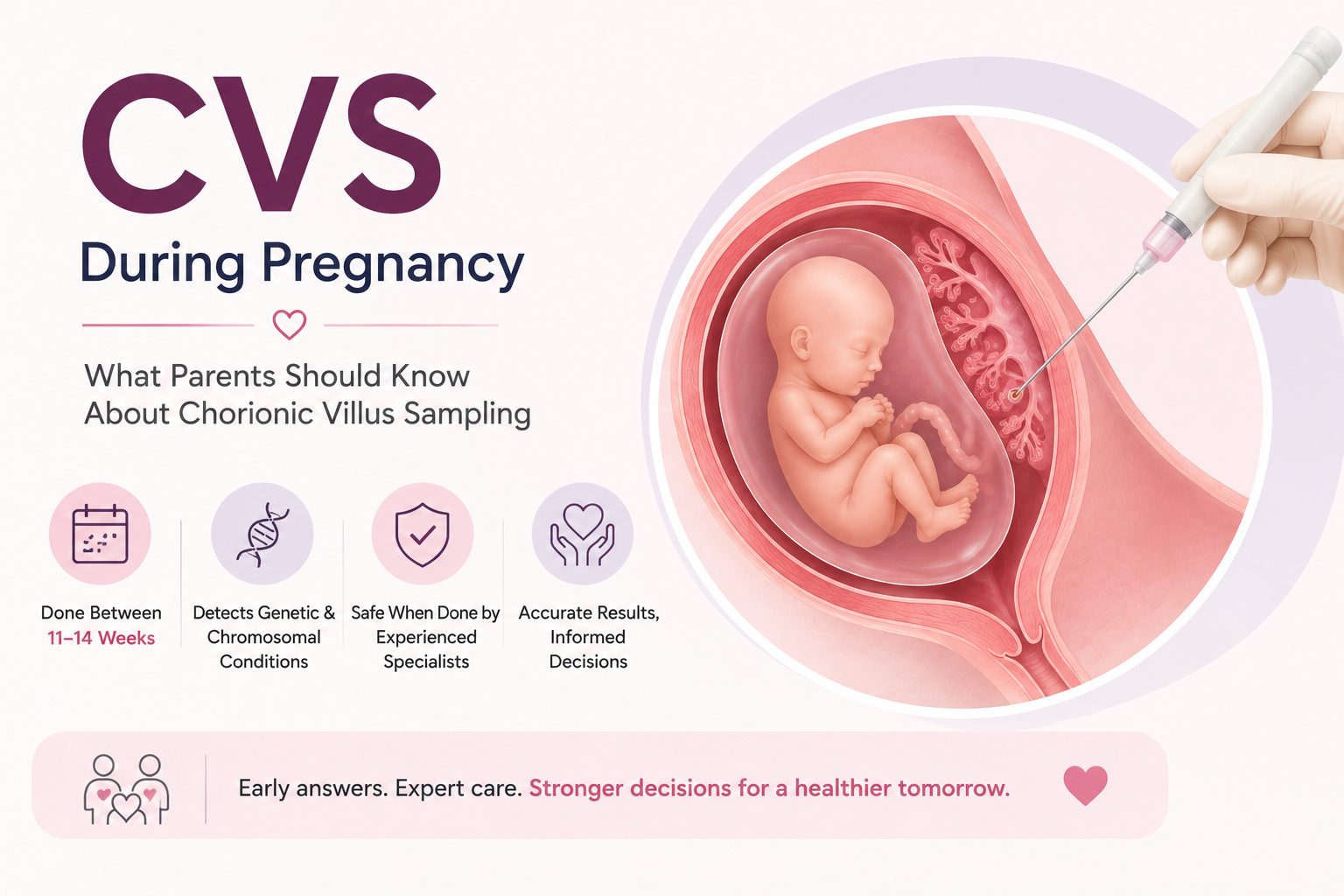
Pregnancy care sometimes involves additional testing to better understand a baby’s genetic health and development. One such test is CVS, also known as Chorionic Villus Sampling.
If your doctor has recommended CVS, it is natural to feel anxious or have questions about why the test is needed, how it is performed, and what the results mean.
Understanding the procedure can help expecting parents feel more informed and prepared during this important stage of pregnancy.
What Is CVS?
Chorionic Villus Sampling (CVS) is a prenatal diagnostic procedure used to detect certain chromosomal and genetic conditions during pregnancy.
The procedure involves collecting a small sample of tissue from the placenta, called chorionic villi, which contains genetic material that usually matches the baby’s chromosomes.
CVS is considered a diagnostic test, meaning it can provide more definitive information than screening tests.
Why Is CVS Done?
Doctors may recommend CVS when there is an increased chance of genetic or chromosomal abnormalities.
The test may help diagnose conditions such as:
- Down syndrome (Trisomy 21)
- Edwards syndrome (Trisomy 18)
- Patau syndrome (Trisomy 13)
- Certain inherited genetic disorders
- Chromosomal abnormalities
- Some metabolic or single-gene disorders
CVS can provide early genetic information during pregnancy, which may help families and doctors plan further care.
When Is CVS Performed?
CVS is usually performed between 11 and 14 weeks of pregnancy.
One advantage of CVS is that it can be done earlier than amniocentesis, allowing earlier diagnostic information if needed.
The timing depends on:
- Pregnancy stage
- Placenta position
- Ultrasound findings
- Specialist recommendation
Who May Need CVS?
Your doctor or fetal medicine specialist may recommend CVS in the following situations.
1. High-Risk Screening Results
If early pregnancy screening tests show increased risk, CVS may be advised for confirmation.
This may include:
- Increased NT scan measurement
- Abnormal double marker test
- High-risk NIPT result
Screening tests estimate risk, while CVS can help confirm certain chromosomal conditions.
2. Family History of Genetic Disorders
If there is a known inherited condition in the family, CVS may help assess whether the baby is affected.
Examples include:
- Thalassemia
- Spinal muscular atrophy
- Certain inherited metabolic disorders
- Chromosomal abnormalities
3. Previous Pregnancy With Genetic Condition
Parents who previously had a pregnancy or child affected by a genetic disorder may be offered CVS in future pregnancies.
4. Abnormal Ultrasound Findings
Certain findings during early pregnancy scans may increase suspicion for chromosomal abnormalities or genetic conditions.
Examples may include:
- Increased NT thickness
- Structural abnormalities
- Early growth concerns
5. Advanced Maternal Age
Pregnancy after age 35 may slightly increase the risk of chromosomal abnormalities, and some parents may choose diagnostic testing for reassurance.
How Is CVS Performed?
CVS is performed under ultrasound guidance by an experienced fetal medicine specialist.
Depending on the placenta location, the sample may be collected through:
Transabdominal CVS
A thin needle is inserted through the abdomen into the placenta under ultrasound guidance.
Transcervical CVS
A thin catheter is passed through the cervix to collect placental tissue.
The method used depends on:
- Placenta position
- Pregnancy condition
- Specialist preference
The procedure usually takes only a few minutes.
Is CVS Painful?
Most women experience mild discomfort rather than severe pain.
You may feel:
- Mild cramping
- Pressure during the procedure
- Temporary abdominal discomfort
Many mothers compare the sensation to a blood test or mild menstrual cramps.
Is CVS Safe?
CVS is generally considered safe when performed by experienced specialists under ultrasound guidance.
However, because it is an invasive procedure, there are small risks involved, including:
- Mild bleeding or spotting
- Cramping
- Infection (rare)
- Fluid leakage (rare)
- Pregnancy loss (rare)
Your fetal medicine specialist will discuss the risks and benefits clearly before the procedure.
How Long Does It Take to Get Results?
Some preliminary results may be available within a few days, while complete genetic analysis can take around 1 to 3 weeks depending on the tests performed.
Your doctor will explain the expected timeline for your specific testing.
CVS vs Amniocentesis: What’s the Difference?
Many parents want to understand how CVS differs from amniocentesis.
| CVS | Amniocentesis |
|---|---|
| Usually done between 11–14 weeks | Usually done between 15–20 weeks |
| Uses placental tissue sample | Uses amniotic fluid sample |
| Provides earlier diagnosis | Performed later in pregnancy |
| Diagnostic test | Diagnostic test |
Both tests are used to diagnose certain chromosomal and genetic conditions, but the timing and procedure differ.
CVS vs NIPT: What’s the Difference?
NIPT
- Blood test from the mother
- Screening test
- Estimates risk
- Non-invasive
CVS
- Placental tissue sample
- Diagnostic test
- Can confirm certain conditions
- Invasive procedure
Your doctor will guide you regarding the most appropriate testing option for your pregnancy.
What Should You Do After CVS?
After the procedure, doctors usually advise:
- Rest for the day
- Avoiding strenuous activity temporarily
- Monitoring for unusual symptoms
You should contact your doctor if you experience:
- Heavy bleeding
- Fever
- Severe abdominal pain
- Continuous fluid leakage
Most women recover without complications and resume normal activities soon after.
Emotional Support During the Process
Waiting for genetic testing and results can feel stressful for many parents.
It is important to remember:
- A recommendation for CVS does not automatically mean something is wrong
- Many pregnancies tested through CVS have normal results
- Genetic counselling and fetal medicine teams are there to provide support, guidance, and clear information throughout the process
Compassionate communication and expert care can help families feel more reassured during this period.
When Should You Consult a Fetal Medicine Specialist?
You should consider specialist consultation if:
- Screening tests show increased risk
- There are abnormal scan findings
- You have family history of genetic conditions
- You need guidance regarding prenatal diagnostic testing
- You want to understand the risks and benefits of CVS
Early consultation helps families make informed pregnancy decisions with confidence.
Expert Prenatal Diagnostic Care at Mom & Me
At Mom & Me, we understand that prenatal diagnostic testing can feel emotional and complex for families. Our fetal medicine specialists provide compassionate counselling, advanced fetal assessment, and expert prenatal diagnostic procedures to support parents throughout their pregnancy journey.
From early screening to genetic counselling and diagnostic testing, our team is committed to providing accurate information, emotional support, and personalized pregnancy care.
Book a consultation at Mom & Me to understand whether CVS is appropriate for your pregnancy and receive expert fetal medicine guidance.
1. What is CVS during pregnancy?
CVS (Chorionic Villus Sampling) is a prenatal diagnostic test used to detect certain genetic and chromosomal conditions.
2. When is CVS performed?
CVS is usually done between 11 and 14 weeks of pregnancy.
3. Is CVS painful?
Most women experience mild discomfort or cramping during the procedure, but it is usually brief.
4. Is CVS safe?
CVS is generally safe when performed by experienced specialists, although small risks are associated with invasive procedures.
5. What conditions can CVS detect?
CVS can help diagnose conditions such as Down syndrome and certain inherited genetic disorders.
6. How long does it take to get CVS results?
Some preliminary results may be available within days, while detailed analysis may take 1 to 3 weeks.