
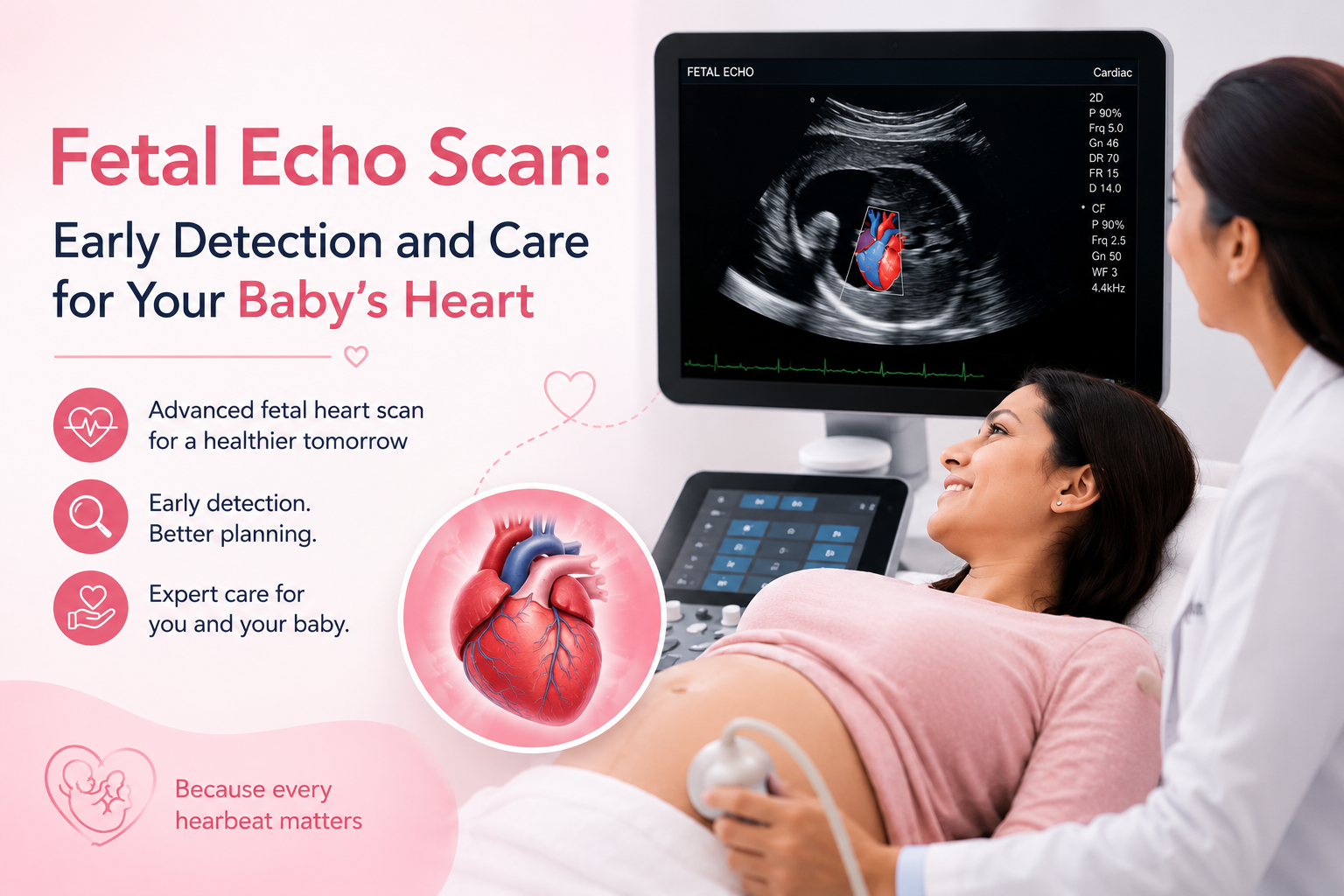
This scan focuses specifically on your baby’s heart and helps doctors assess how it is developing before birth. For many parents, it provides valuable reassurance and early guidance if any heart-related concerns are identified.
What Is a Fetal Echo?
A Fetal Echo is a specialized ultrasound scan that examines the structure and function of the baby’s heart during pregnancy.
Unlike a routine pregnancy ultrasound, this scan is performed in greater detail to evaluate:
- Baby’s heart chambers
- Heart valves
- Blood flow through the heart
- Heart rhythm
- Major blood vessels connected to the heart
- Overall heart development
The scan is usually performed by a fetal medicine specialist or a doctor trained in fetal cardiac imaging.
It is important to know that a fetal echo is safe, non-invasive, and painless for both mother and baby.
When Should a Fetal Echo Be Done?
A fetal echo is usually performed between 18 and 24 weeks of pregnancy. This is considered the ideal time because the baby’s heart is developed enough to allow detailed assessment.
In some cases, the scan may be recommended earlier or repeated later depending on the pregnancy condition or previous scan findings.
Early booking is important if your doctor has advised the test, especially in pregnancies that require closer monitoring.
Why Is a Fetal Echo Important?
A fetal echo helps doctors identify certain heart conditions before birth. Early detection allows families and medical teams to plan the right care during pregnancy and after delivery.
The scan can help:
- Detect congenital heart defects
- Assess abnormal heart rhythm
- Evaluate blood flow patterns
- Monitor babies with increased risk factors
- Plan specialized care before delivery if needed
- Provide reassurance when the heart appears normal
Many heart conditions can be managed more effectively when identified early, which is why fetal cardiac screening can play an important role in prenatal care.
Who May Need a Fetal Echo?
Not every pregnancy requires a fetal echo. Your doctor may recommend it if there are certain risk factors or concerns during pregnancy.
You may be advised to undergo a fetal echo if:
1. The Anomaly Scan Shows a Concern
If a routine anomaly scan suggests a possible heart abnormality or limited cardiac visibility, a fetal echo may be recommended for detailed evaluation.
2. There Is a Family History of Heart Defects
If a parent, sibling, or previous child has a congenital heart condition, the doctor may advise fetal heart screening.
3. The Mother Has Certain Medical Conditions
Conditions such as:
- Diabetes
- Autoimmune disorders
- Lupus
- Thyroid disease
- Certain infections during pregnancy
may increase the need for fetal cardiac assessment.
4. Pregnancy Is Considered High Risk
Twin pregnancies, IVF pregnancies, or pregnancies with growth concerns may sometimes require additional fetal monitoring.
5. Abnormal Genetic Screening Results
If earlier screening tests indicate increased chromosomal risk, doctors may recommend a fetal echo because some genetic conditions can be associated with heart abnormalities.
6. Irregular Baby Heartbeat Is Detected
If your doctor notices an abnormal fetal heart rhythm during routine checkups, a fetal echo can help determine the cause.
What Happens During the Scan?
A fetal echo is similar to a regular ultrasound scan.
During the procedure:
- Gel is applied to the abdomen
- An ultrasound probe is moved over the tummy
- Detailed images of the baby’s heart are viewed on a monitor
- The specialist carefully studies the heart structures and blood flow
The scan usually takes around 30 to 60 minutes, depending on the baby’s position and the complexity of evaluation needed.
Sometimes, if the baby is not in a favorable position, you may be asked to move around or return later for clearer images.
Is a Fetal Echo Painful or Harmful?
No. A fetal echo is a safe ultrasound-based test and does not involve radiation, injections, or surgery.
It is considered safe when performed by trained medical professionals for prenatal assessment.
Most mothers experience the scan just like a detailed pregnancy ultrasound.
What Can a Fetal Echo Detect?
A fetal echo can help identify several heart-related conditions, including:
- Structural heart defects
- Hole in the heart
- Valve abnormalities
- Abnormal blood vessel connections
- Heart rhythm disorders
- Congenital heart disease
- Problems with blood flow through the heart
However, no scan can guarantee detection of every minor condition. Some heart issues may only become visible later in pregnancy or after birth.
What If the Fetal Echo Shows a Problem?
Hearing that further evaluation is needed can feel overwhelming for parents. However, it is important to remember that many babies with heart conditions receive successful treatment and ongoing care.
If a concern is identified, your doctor may recommend:
- Follow-up fetal echo scans
- Genetic counselling
- Additional fetal medicine evaluation
- Delivery planning at a specialized center
- Pediatric cardiology consultation after birth
The goal of early diagnosis is to ensure that both mother and baby receive the right care at the right time.
How Should You Prepare for a Fetal Echo?
Usually, no special preparation is required.
Helpful tips include:
- Carry previous scan reports and medical records
- Wear comfortable clothing
- Reach the clinic on time
- Stay relaxed during the scan
- Ask questions if you have concerns or anxiety
Understanding the purpose of the scan beforehand can also help parents feel more comfortable during the appointment.
Fetal Echo vs Routine Pregnancy Scan: What’s the Difference?
A routine pregnancy scan checks overall fetal growth and development.
A Fetal Echo, on the other hand, focuses specifically on the baby’s heart using more detailed imaging techniques.
It provides a closer assessment of heart structure, function, rhythm, and blood flow that may not be fully evaluated during a routine scan.
Can a Normal Fetal Echo Guarantee a Healthy Heart?
A normal fetal echo is reassuring and means that no significant heart abnormality was identified during the scan.
However, like all prenatal tests, it may not detect every minor issue. Some small heart conditions may become noticeable only after birth.
Your doctor will continue regular pregnancy monitoring throughout the pregnancy.
When Should You Book a Fetal Echo?
If your doctor has advised a fetal echo or if you have a high-risk pregnancy, it is best to book the scan within the recommended pregnancy window — usually between 18 and 24 weeks.
Early assessment can help provide reassurance, clarity, and timely medical planning if required.
Book Your Fetal Echo at Mom & Me
At Mom & Me, we understand how important reassurance and expert guidance are during pregnancy. Our fetal medicine specialists focus on compassionate care, advanced imaging, and detailed fetal assessment to support expecting parents at every step.
If your doctor has recommended a fetal echo, our team is here to guide you with clarity and care.
Book your fetal echo scan at Mom & Me for expert fetal heart assessment and personalized pregnancy care.
Frequently Asked Questions
1. Is a fetal echo necessary for every pregnancy?
No. A fetal echo is usually recommended when there are specific risk factors or concerns related to the baby’s heart.
2. Is a fetal echo different from a normal ultrasound?
Yes. A fetal echo focuses specifically on the baby’s heart and provides more detailed cardiac assessment than a routine pregnancy scan.
3. How long does the scan take?
The scan usually takes around 30 to 60 minutes depending on the baby’s position and the complexity of the examination.
4. Can a fetal echo detect all heart problems?
A fetal echo can detect many significant heart conditions, but some minor abnormalities may not be visible before birth.
5. Is the scan safe during pregnancy?
Yes. It is a safe, ultrasound-based procedure with no radiation exposure.
6. What happens if an abnormality is found?
Your doctor may recommend follow-up scans, genetic counselling, or consultation with a pediatric cardiologist depending on the findings.